

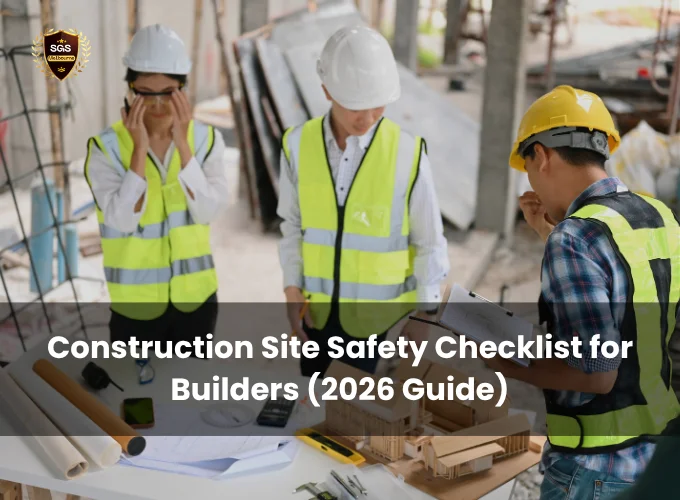
Construction Site Safety Checklist for Builders (2026 Guide)
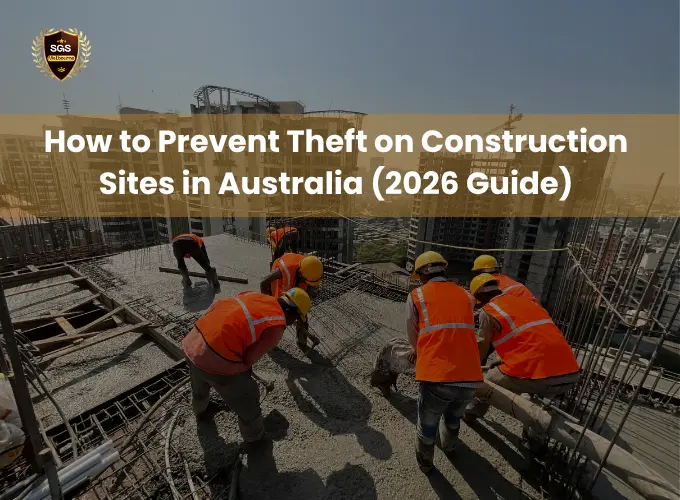
Construction Site Security Checklist for Builders and Site Managers
Most site security fails aren’t dramatic break-ins. They’re small gaps — a gate left unlocked over a long weekend, a delivery left sitting out overnight, a container that’s easy to prise open. This checklist works through every layer of protection a Melbourne construction site safety actually needs, in the order most builders should tackle them.
A complete construction site security checklist covers seven areas: perimeter fencing, access control, lighting, storage, surveillance technology, documentation, and — for higher-risk or larger sites, dedicated security guards were positioned. Most sites need a security combination, not a single measure.
Why a Checklist Approach Works Better Than Ad-Hoc Security
A checklist forces consistency across every site and every shift — most security failures happen when a measure exists but isn’t actually followed, not because the measure was missing in the first place.
A locked gate policy is only as good as the person who remembers to lock it at 4:30pm on a Friday. Security breaks down at the handover points — between site managers, between shifts, between subcontractors coming and going. A written checklist, reviewed at the start and end of each week, closes that gap far more reliably than relying on memory or habit.
This matters more on construction sites than almost any other business type, because the site itself changes constantly. What’s true in week two of a build — an open slab, minimal materials on-site — is completely different by week twelve, when copper, fixtures, and machinery have accumulated. A static, one-time security setup doesn’t hold up against a site that keeps evolving.
Your Legal Duty to Secure a Construction Site in Victoria
Under Victoria’s Occupational Health and Safety Act 2004, anyone with management or control of a construction site has a legal duty to keep it safe — including securing it against public access outside work hours, not just protecting workers during the day.
This is the part most security checklists skip entirely, and it’s worth understanding properly. WorkSafe Victoria’s specific guidance on construction site security fencing makes clear that the OHS Act’s duty applies even when no work is taking place. An unoccupied site over a weekend or overnight still carries a legal obligation — particularly because members of the public, including children, may wander onto an unsecured site and be exposed to serious risk.
In practice, this means site security in Victoria isn’t just a theft-prevention decision. It’s a compliance obligation that sits alongside your standard OHS responsibilities. A poorly secured site that leads to a member of the public being injured is a very different (and far more serious) problem than a stolen generator.
Did You Know? WorkSafe’s guidance specifically calls out the risk to children entering an unoccupied site — a consideration that should factor into fencing height, gate security, and signage, not just theft deterrence.
Construction Safety Checklist
1. Perimeter & Fencing Checklist
Fencing is your first layer of both legal compliance and theft deterrence — it needs to be inspected regularly, not just installed once at the start of a project.
- Fencing installed around the full site perimeter before work begins
- Commercial sites use solid hoarding; residential sites use heavily weighted, panel-style fencing that can’t easily be moved
- Fencing height and design account for public access risk, including children
- No gaps, damaged panels, or unsecured sections — checked weekly, not just at installation
- Fence line kept clear of stacked materials that could be used to climb over
- Signage displaying builder details and an after-hours contact number, as recommended by Victoria Police
2. Access Control Checklist
A single, clearly defined access point with a sign-in process is one of the simplest measures that stops both external theft and internal loss.
- One controlled entry point, not multiple informal access routes
- Sign-in/sign-out process for all workers, contractors, and delivery drivers
- Visitor and contractor identities verified, not just waved through
- Master keys and site access tracked — logged when issued, confirmed when returned
- Gates locked immediately after the last person leaves, not “at some point” during pack-down
- Delivery scheduling coordinated to reduce how long materials sit unattended before installation
3. Lighting & Visibility Checklist
Lighting removes the concealment that after-hours thieves rely on and directly improves the effectiveness of any CCTV already on-site.
- Temporary lighting installed at entry points before permanent power is connected
- Storage areas and equipment compounds lit, not just the main gate
- Lighting checked for coverage gaps as the site layout changes week to week
- Motion-activated lighting considered for isolated or rear-of-site areas
4. Storage & Equipment Checklist
Portable tools and equipment should never sit exposed overnight — locked storage is one of the cheapest, highest-return security measures on any site.
- All portable tools and equipment locked in containers or gang boxes at end of each day
- High-value items in reinforced lockboxes, not just a standard padlocked container
- Equipment engraved or marked with business identification
- Serial numbers recorded and kept in an accessible register, not just on a supplier invoice
- Fuel and generators stored securely, away from the perimeter fence line
- Vehicles, utes, and trailers not left loaded with tools overnight where avoidable
5. Technology & Surveillance Checklist
CCTV, alarms, and asset tracking add a layer physical security can’t — evidence, real-time alerts, and improved recovery odds if something is taken.
- CCTV covering entry points, storage compounds, and known blind spots
- Solar or wireless CCTV considered for early-stage sites without permanent power
- Audible alarm system connected to a monitored response, not just a siren nobody hears
- GPS or asset tracking on higher-value machinery and equipment
- Camera and alarm systems tested regularly — not installed once and forgotten
Learn more about how these systems work alongside a physical presence in our guide to integrating CCTV and security guards for better property protection.
6. Documentation & Reporting Checklist
Written records protect you legally and financially if an incident does occur — undocumented losses are far harder to claim on insurance or report meaningfully to police.
- Equipment register maintained with serial numbers and photos
- Incident log kept for any security breach, near-miss, or suspicious activity
- Neighbours’ contact details on file — useful for reporting suspicious activity in quieter or rural areas
- Insurance policy confirmed to cover theft and vandalism for the specific project stage you’re in
- Site security reviewed and documented at key project milestones, not just at the start
7. Guard & Patrol Coverage Checklist
Physical and technology measures reduce opportunistic theft, but guards are the only layer that can intervene during an incident, which matters most for higher-value or higher-risk sites.
- Site risk assessed honestly — value of materials/machinery, location, project stage, prior incidents
- Static guard coverage considered for overnight and weekend windows, the highest-risk periods
- Mobile patrol security considered for lower-risk sites or as a cost-effective supplement to static coverage
- Guard coverage scaled to project duration — short builds don’t need a long-term contract
- Provider’s guards confirmed licensed under the Private Security Act 2004 (Vic)
For a deeper look at how guards fit into the broader safety picture on-site, see our guide on the role of security guards in construction site safety.
Building Checklist by Project Stage
Security needs shift as a project progresses — early-stage sites need perimeter and access control, later stages need equipment and fixture protection.
| Project Stage | Highest Risk | Priority Checklist Items |
|---|---|---|
| Pre-construction / site prep | Trespass, unsecured excavation | Fencing, signage, lighting |
| Frame stage | Timber and material theft | Access control, coordinated deliveries |
| Rough-in (electrical/plumbing) | Copper and cable theft | Locked storage, CCTV, guard coverage for high-value sites |
| Fit-out / near handover | Appliance and fixture theft | Locked-down access, static guard coverage, final walk-through checks |
Expert Tip: Most builders relax security as a project nears completion because “there’s not much left to steal.” In reality, the fit-out stage is when the most resellable, high-value items — appliances, tapware, hot water systems — are sitting on-site, often with the easiest access of the entire build.
The Complete Construction Site Security Checklist (Printable)
Use this as a single reference — print it, laminate it, or pin it to the site office wall.
- Perimeter fencing inspected weekly, no gaps or damage
- Signage with builder details and after-hours contact number displayed
- Single controlled access point with sign-in process
- Site keys tracked and confirmed returned
- Lighting covers entry points and storage areas
- Tools and equipment locked away every night, no exceptions
- Equipment engraved and serial numbers recorded
- CCTV covering entry points and blind spots
- Alarm system connected to a monitored response
- Incident log maintained and reviewed monthly
- Insurance confirmed current for theft and vandalism
- Security measures reassessed at each project stage
- Guard or patrol coverage arranged for high-risk periods or high-value sites
Conclusion
Construction site security isn’t one decision — it’s a set of habits, checked consistently, that adjust as your project moves through each stage.
The checklist above covers every layer, from fencing through to guard coverage, and doubles as a legal safeguard under Victoria’s OHS Act, not just a theft-prevention tool.
If you’d rather have a professional team assess your site and handle the higher-risk layers directly, our construction site security services in Melbourne cover everything from static guards to short-term project coverage.
Get a Free Site Security Assessment
Not sure which parts of this checklist your current site is missing? Our team will walk your site, flag the gaps, and recommend exactly what’s needed
Popular posts: