



Security Guard Equipment List Australia: The Complete 2026 Guide
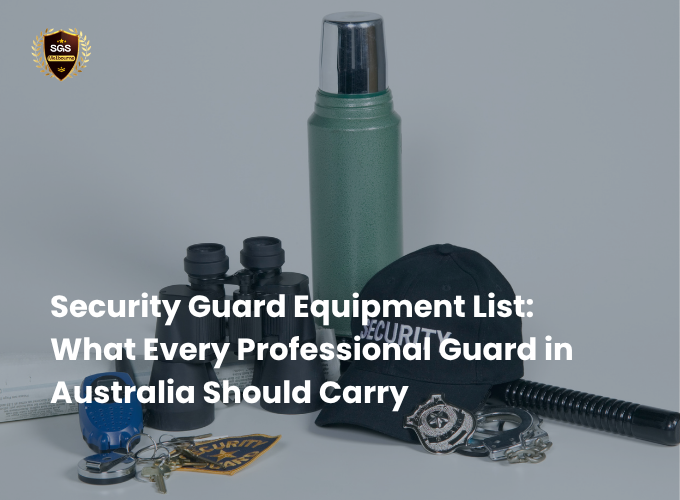
Security Guard Equipment List Australia: The Complete 2026 Guide Security Guard Equipment List: What Every Professional Guard in Australia Should Carry A guard’s equipment tells you a lot about the company standing behind them. Two guards can wear the same uniform and still be worlds apart in how prepared they actually are. If you’re hiring security for a construction site, retail store, office, or event, knowing what proper equipment looks like helps you evaluate a provider before you sign anything. This guide breaks down the full security guard equipment list used across Australia in 2026, what’s legally restricted, and what to ask your provider before booking. A professional security guard in Australia typically carries a uniform, communication device, torch, first aid kit, notebook, and identification, plus role-specific gear such as body cameras, GPS patrol devices, or defensive equipment where licensed. Items like batons, tasers, and firearms require specific state endorsements on top of a standard security licence. Why Equipment Matters When Hiring Security Proper equipment affects a guard’s ability to communicate, document incidents, respond to emergencies, and prove their actions were professional and compliant. Under-equipped guards can’t do their job properly, no matter how experienced they are. A guard without a working radio can’t call for backup. A guard without incident reporting tools can’t create the patrol logs your business may need for insurance or legal purposes. Equipment standards also signal how seriously a provider takes risk management and duty of care. Businesses evaluating a security company should treat equipment as part of the due diligence process, not an afterthought. Did You Know? In an incident dispute, a guard’s notes, timestamps, and photos are often the first evidence reviewed — before CCTV footage is even pulled. Standard Uniform and Identification Every licensed guard should wear a clearly identifiable uniform, a visible licence badge, and appropriate footwear suited to the role. Uniform — typically a branded shirt, trousers, and jacket in the provider’s colours. Crowd control and event roles often require high-visibility elements. Licence identification — Australian law requires guards to visibly display or carry their security licence while on duty. Learn more about why security uniforms are essential. Footwear — sturdy, slip-resistant boots designed for long shifts and, on construction sites, compliant with workplace safety standards. Weatherproof outerwear — wet-weather jackets for outdoor static and patrol roles. Expert Tip: Ask your provider whether guards carry a spare uniform item (jacket or vest) for extended or unexpected shifts. It’s a small detail that reflects operational discipline. Communication Equipment Two-way radios remain the primary communication tool for security guards, supported by mobile phones and, increasingly, app-based dispatch systems. Two-way radio — instant, reliable contact with control rooms and nearby guards, especially where mobile signal is weak. Mobile phone — used for emergency calls, incident photos, and coordination with off-site supervisors. Earpieces — discreet communication for concierge, retail, and event roles where visible radios aren’t appropriate. Dispatch apps — increasingly used for mobile patrol security to log check-ins and receive real-time alerts. Common Mistake: Relying on personal mobile phones alone. Battery failure or poor reception during an incident can delay a response when it matters most. Personal Protective Equipment (PPE) PPE for security guards includes hi-vis clothing, gloves, hearing protection, and, on construction or industrial sites, hard hats and safety glasses matching the site’s WHS requirements. Guards working on construction sites or in industrial environments must meet the same PPE standards as other workers on-site, including: Hard hats or helmets in designated zones High-visibility vests or clothing Safety glasses and gloves for hazardous areas Hearing protection near heavy machinery Best Practice: Confirm your provider issues site-specific PPE rather than assuming guards will bring their own. This is a common gap that creates compliance risk for site managers. Documentation and Reporting Tools Guards need reliable tools to record incidents, patrols, and observations — from notebooks and digital cameras to fully digital reporting apps. Notebook and pen — a low-tech backup that never runs out of battery, still used alongside digital tools. Digital camera or smartphone camera — for photographic evidence of damage, breaches, or incidents. Digital incident reporting apps — increasingly standard, allowing time-stamped reports to reach management instantly. Patrol log/GPS checkpoint scanner — verifies a guard physically completed each patrol point, a key feature covered in our guide on emergency response protocols. Quick Summary: The shift from paper logbooks to digital reporting is one of the biggest equipment changes in the Australian security industry over the past five years. Surveillance and Technology Equipment Modern guards increasingly use body cameras, binoculars, and GPS devices to improve accountability and situational awareness. Body cameras — record interactions for evidence and accountability, discussed in detail in the importance of body cameras for security guards. Binoculars — useful for guards monitoring large perimeters, car parks, or construction sites from a fixed post. GPS trackers — confirm patrol routes were completed as scheduled, particularly for mobile patrol services. CCTV handheld monitors — allow static guards to cross-check camera feeds without leaving their post. See how this pairs with guard coverage in our guide to integrating CCTV and security guards. This shift reflects a broader trend covered in the role of technology in enhancing security guard efficiency, where guards increasingly work alongside — not instead of — electronic systems. Defensive and Restraint Equipment Defensive equipment such as batons, handcuffs, and pepper spray requires specific licence endorsements in Australia and cannot be carried without them. Equipment Purpose Licence Requirement Handcuffs Temporary restraint pending police arrival Training-dependent, role-specific Baton Physical deterrent/defence Requires specific endorsement in most states Pepper spray Non-lethal self-defence Restricted; not permitted for general guards in several states Taser Non-lethal incapacitation Highly restricted, rarely authorised for standard guards Firearm Armed guard duties (cash-in-transit, high-risk sites) Separate firearms licence and endorsement required Bulletproof vest Protective wear for high-risk roles No licence required, but role-dependent Expert Tip: If a provider’s guards appear to be carrying restraint or defensive equipment, ask to see the specific licence endorsement — not just the standard
The Complete Guide to Hiring Security Guards in Australia 2026 [Updated]
The Complete Guide to Hiring Security Guards in Australia 2026 [Updated] Security decisions protect people, assets, and reputation. Get them wrong and the cost is far higher than a guard’s hourly rate. This guide walks you through every step of hiring security guards in Australia, from working out if you need one to reviewing your first month of service. Whether you manage a construction site, a retail chain, a hospital, or a corporate office, you’ll find practical, current, Australian-specific guidance here. No filler. No generic advice copied from overseas blogs. By the end, you’ll know exactly what to ask, what to pay, and how to spot a security provider worth trusting with your business. Why Businesses Need Security Guards Businesses hire security guards to prevent loss, protect people, meet duty-of-care obligations, and respond to incidents before they escalate. Australian businesses face a mix of predictable and unpredictable risks. Retail stores lose stock to theft. Construction sites lose tools and materials overnight. Offices manage visitor access and after-hours risk. Hospitals manage aggressive behaviour and restricted-area breaches. A security guard is not just a deterrent standing at a door. Trained guards actively manage access control, monitor for threat assessment indicators, and respond to emergencies under clear standard operating procedures. Every organisation carries a legal duty of care toward staff, visitors, and contractors. Courts and regulators increasingly expect businesses to show they took reasonable steps to prevent foreseeable harm. A documented security presence is part of that evidence. Did You Know? Under Australian work health and safety law, “reasonably practicable” steps to control risk can include physical security measures such as guards, access control, and CCTV monitoring — not just equipment safety. Benefits of Hiring Professional Security Professional guards reduce theft, improve emergency response times, support compliance, and give staff and customers a stronger sense of safety. Licensed security personnel bring more than a uniform. They bring trained judgement, reporting discipline, and a visible presence that changes behaviour on-site. Loss prevention — trained guards recognise theft patterns and intervene appropriately, protecting inventory and equipment. Faster emergency response — guards trained in first aid and emergency protocols reduce the time between an incident and a coordinated response. Improved compliance — guards support workplace safety, crowd control, and access rules that regulators and insurers expect to see enforced. Better customer and staff experience — a professional, well-presented guard reassures visitors and employees, particularly in high-footfall or high-risk locations. Documented accountability — patrol logs and incident reports create a paper trail that protects your business in disputes, insurance claims, and legal proceedings. Expert Tip: Ask any prospective provider how their guards document a typical shift. If the answer is vague, their reporting standards probably are too. When Should You Hire Security Guards Hire security guards when you identify a specific risk to people, property, or operations that ongoing monitoring or a physical presence can reduce. Common triggers include: Opening a new retail location or warehouse Starting a construction project with valuable materials or machinery on-site Hosting an event with more than 50 attendees Experiencing repeated theft, vandalism, or trespassing Managing a facility with public access, such as a hospital, school, or shopping centre Needing after-hours coverage for an unoccupied site Responding to a specific threat, dispute, or period of instability Decision Tip: If an incident at your site would cause financial loss, reputational damage, or harm to a person, that’s a strong signal you need a security presence — not just insurance. Many businesses wait until after an incident to act. A security risk assessment done in advance is far cheaper than recovering from a preventable loss. Book Your Guards: 0434 879457 How to Perform a Security Risk Assessment A security risk assessment identifies your assets, the threats against them, existing vulnerabilities, and the likelihood and impact of each risk — before you decide what security you need. Most Australian competitors skip this step entirely and jump straight to guard types. That’s a mistake. Assessment comes first. Step-by-step process: Identify assets — people, stock, equipment, cash, data, and reputation. Map vulnerabilities — unmonitored entry points, poor lighting, blind spots, weak access control. Assess threats — theft, vandalism, trespassing, workplace violence, activism, terrorism-related risk for high-profile sites. Rate likelihood and impact — score each risk to prioritise your response. Match controls to risk — decide between guards, patrols, CCTV, alarms, or a combined approach. Document findings — a written assessment supports insurance, compliance, and future budget decisions. Risk Assessment Matrix Risk Level Likelihood Impact Example Site Recommended Response Low Rare Minor Small office, low foot traffic Alarm + occasional patrol Moderate Possible Moderate Retail store, small warehouse Static guard during trading hours High Likely Major Construction site, large retail Static guard + mobile patrol + CCTV Critical Frequent/ongoing Severe Hospital, government site, major event 24/7 static presence + control room monitoring Common Mistake: Businesses often size their security to their budget rather than their risk. This leads to under-protection at exactly the sites that need the most coverage. Best Practice: Repeat your risk assessment annually, or immediately after any incident, expansion, or change in site layout. Schedule a Free Site Assessment Types of Security Guard Services Australian security providers offer static guards, mobile patrols, event security, retail security, corporate security, construction security, and specialised concierge or executive protection services. Understanding different types of security guard services helps you match the right guard to the right risk, rather than paying for more than you need. Static security guards — stationed at one location, ideal for reception areas, warehouses, and construction sites. Mobile patrol security — guards who visit multiple sites on a scheduled or randomised route, cost-effective for lower-risk properties. Event security guards — manage crowd flow, access points, and incident response at concerts, festivals, and corporate functions. Corporate security guards — front-of-house presence, visitor management, and after-hours access control for offices. Retail security guards — focused on loss prevention, customer safety, and de-escalation in high-theft environments. Construction site security guards — overnight protection against theft of
Essential C’s & P’s of Security Guards – What You Must Know Before Joining a Security Company
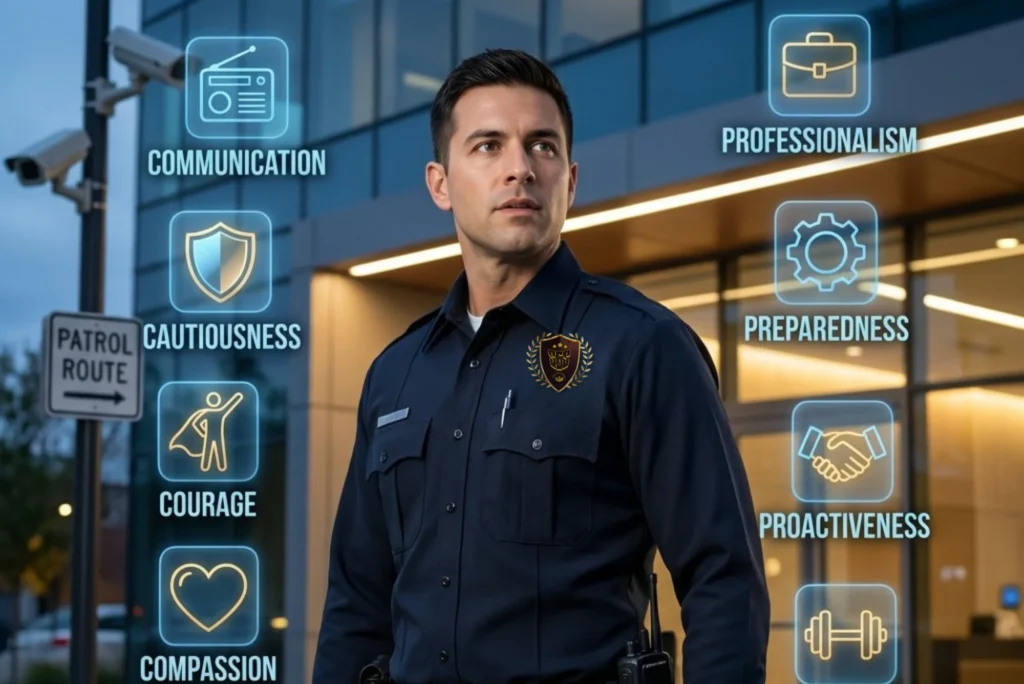
Essential C’s & P’s of Security Guards – What You Must Know Before Joining a Security Company April 8, 2026 Security guarding is not just about standing at a gate or monitoring a site. It is a responsibility that demands awareness, discipline, and the ability to act at the right time. If you are planning to become a security guard in Melbourne, you must understand these core qualities that define a professional guard. The 5 C’s and 4 P’s of security guards represent the foundation of this profession. These principles shape how a guard communicates, responds to threats, and maintains safety in any environment. In this guide, you will learn what these qualities are, why they matter, and how professional companies apply them in real-world situations. Qualities of a Security Guard What qualities should a security guard have? A security guard should have strong observation skills, clear communication, confidence, physical fitness, and the ability to stay calm under pressure. These qualities help prevent incidents, manage emergencies, and ensure a safe environment for people and property. Moreover, a security guard acts as the first line of defense. Whether it is a retail store, construction site, or corporate office, the guard must stay alert and handle situations with confidence. A professional guard should have: These qualities build trust and ensure safety in any environment. To understand the key responsibilities of Australian security guards, check out this detailed guide: Responsibilities of Security Guards in Australia. What are the 5 C’s of Security Guards? The 5 C’s of security guards are Communication, Cautiousness, Confidence, Courage, and Compassion. These core qualities help security professionals handle risks, interact with people effectively, and maintain safety in different environments. Every trained guard must develop these skills to perform duties responsibly. These 5 C’s include: 5 C’s of Security Guards The 5 C’s define the core behavioral and professional standards of a security guard. These are not just theoretical concepts. They directly impact how well a guard performs on duty. 1. Communication A security guard must communicate clearly with team members, clients, and the public. Poor communication leads to confusion and delays during emergencies. Effective communication includes: A guard who communicates well prevents escalation and ensures smooth operations. 2. Cautiousness (Replacement for Vigilance) Instead of using vigilance, Securityguardservices.com.au refines it into Cautiousness to maintain the “C” framework. Cautiousness means staying alert at all times and thinking ahead. A cautious guard does not wait for problems to happen. He identifies risks before they turn into threats. This includes: Cautiousness is what separates an average guard from a highly effective one. 3. Confidence Confidence allows a guard to take control of situations without hesitation. A confident guard creates authority and discourages unwanted behavior. Confidence shows in: However, confidence must stay balanced. Overconfidence can lead to poor judgment. 4. Courage Security work often involves unpredictable situations. Courage helps a guard face risks and act when needed. A courageous guard: Courage does not mean aggression. It means controlled and responsible action. 5. Compassion Many people overlook this quality, but compassion plays a vital role in modern security services. A guard interacts with customers, employees, and visitors daily. Showing empathy builds trust and improves the overall environment. Compassion includes: A compassionate guard enhances both safety and customer experience. Learn another “C” which is about “Challenges faced by Security guards”. What are the 4 P’s of Security Guards? The 4 P’s of security guards are Professionalism, Preparedness, Proactiveness, and Physical Fitness. These principles define how a guard behaves on duty, responds to threats, and maintains discipline. Together, they ensure effective and reliable security performance. The 4 P’s include: The 4 P’s of Security Guards While the 5 C’s focus on behavior, the 4 P’s define the working approach and discipline of a guard. 1. Professionalism Professionalism reflects how a guard presents himself and performs duties. It includes: A professional guard builds confidence in clients and reflects the quality of the security company. 2. Preparedness Security is all about readiness. A guard must always be prepared for any situation. Preparedness involves: A prepared guard reacts faster and minimizes damage during incidents. 3. Proactiveness A proactive guard does not wait for problems. He takes action before issues escalate. This includes: Proactiveness reduces incidents and improves overall safety. 4. Physical Fitness Security work often requires stamina and strength. A physically fit guard can perform duties effectively without fatigue. Fitness helps in: Physical fitness also supports mental alertness and endurance. These 4 P’s are also among the most important factors to consider when hiring security guards in Australia. How Securityguardservices.com.au Demonstrates the C’s and P’s A professional security company must not only talk about these qualities but also implement them in real operations. As one of the top rated security companies in Melbourne, Victoria, Securityguardservices reflects these 4 P’s & C’s in our daily operations. Guards are trained in clear communication and incident reporting If you explore services like construction security, retail protection, or event security on the website, you will see how these qualities translate into real-world results. Why These Qualities Matter for Security Guards Understanding the 5 C’s and 4 P’s is not just for theory. These qualities directly affect performance, safety, and career growth. Here is why they matter: Companies prefer guards who already understand these principles. If you develop these skills early, you increase your chances of getting hired and promoted. Final Thoughts Security guarding is a serious profession that requires more than just presence. The 5 C’s and 4 P’s provide a clear framework for anyone who wants to succeed in this field. If you focus on communication, cautiousness, confidence, courage, and compassion, along with professionalism, preparedness, proactiveness, and physical fitness, you will stand out as a reliable and skilled security guard. Before joining any security company, make sure you understand and develop the essential qualities of a guard. They are not optional. They are essential for delivering real security and building a strong career. For more insights, check out the top benefits
What Does an Event Security Guard Do?
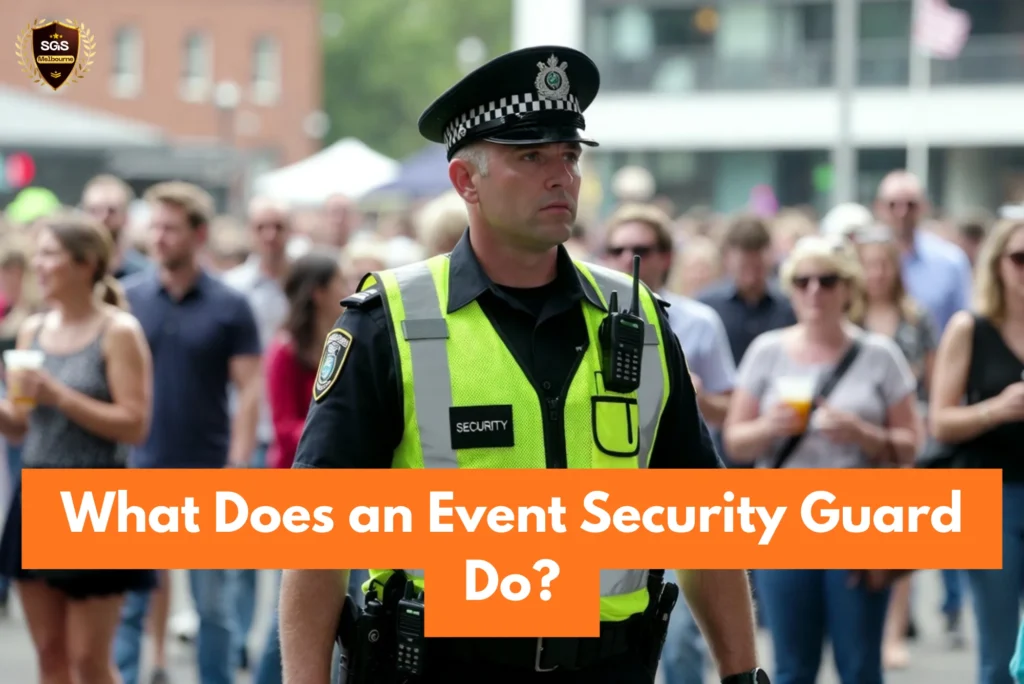
What Does an Event Security Guard Do? Essential Duties for Safe Events February 13, 2026 Ever wondered how massive concerts or bustling festivals stay fun and trouble-free? That’s the magic of event security guards (your behind-the-scenes heroes) who keep chaos at bay. An event security guard protects attendees, staff, and property by monitoring crowds, preventing disruptions, and responding to emergencies swiftly. They handle access control, patrol venues, and coordinate with teams to ensure everything runs smoothly, going far beyond simple door checks to anticipate risks and maintain a safe vibe. In short, they were essential for any gathering, from corporate events to sports matches security, turning potential hazards into worry-free experiences. This thorough guide breaks down their key roles, responsibilities, and why hiring pros can elevate your next event. Understanding the Role of an Event Security Guard These pros keep people, places, and settings safe at different events. They watch entrances, keep order, and fix issues. Unlike regular guards, they focus on busy spots with lots of people, making sure everything is safe and runs well. They team up with event planners, police, and rescue crews to stop dangers before they grow. A good guard mixes watchfulness, fast choices, and clear talk to protect guests and cut risks for planners. Melbourne event security is one of the toughest roles to manage, given the diverse crowds and dynamic environments in the city. Many event hosts and organizers look for the best security company in Melbourne to manage events smoothly from start to finish. Why Event Security Is Essential for Safe Gatherings Protection at occasions is vital, not discretionary. With large groups of people in one location, risks such as theft, medical emergencies, unruly behavior, and unauthorized access increase significantly. Event security personnel help prevent incidents before they happen, maintain crowd discipline, and provide reassurance to attendees and staff. They act as the first line of defense, reducing the likelihood of accidents and ensuring compliance with safety regulations. By working with experienced teams, event planners can create a secure environment that encourages attendance and enhances the overall success of the event. 10 Key Responsibilities of an Event Security Guard Event guards handle multiple responsibilities simultaneously. Their main tasks include monitoring entrances and exits, checking credentials, patrolling event areas, and responding to emergencies. They also manage crowd movement, prevent unauthorized access, and detect suspicious behavior. Beyond physical security, guards often assist with event logistics, support staff, and provide information to attendees. Their role requires vigilance, quick thinking, and professional communication, ensuring a safe environment for everyone at the venue. 1. Preparation and Threat Evaluation Before the Occasion Before any event begins, security guards participate in thorough planning and risk assessment. This involves evaluating the venue, identifying potential hazards, and creating a security plan. They consider crowd size, access points, emergency routes, and specific threats such as theft or medical emergencies. Risk assessment helps security teams anticipate challenges, allocate resources efficiently, and ensure that the necessary safety measures are in place. Professional planning minimizes risks and prepares guards to respond effectively in real-time situations. 2. Crowd Control Strategies and Best Practices Managing large crowds is one of the most critical aspects of event security. Guards use barriers, designated walkways, and organized entry points to control movement and prevent overcrowding. Effective crowd control also involves monitoring behavior, maintaining clear sightlines, and coordinating with other team members. For high-energy environments like live performances, many organizers prefer to hire concert security guards in Melbourne to manage stage access, backstage areas, and crowd surges near performance zones. 3. Access Control: Managing Entry and Identification One of the primary duties of event guards is managing access points. This includes checking tickets, identification, or guest lists, and preventing unauthorized entry. Guards may also inspect bags or enforce prohibited items policies. Effective access control ensures that only authorized individuals enter the venue, protecting attendees and assets from theft, disruptions, or security breaches. It also helps maintain the event’s schedule by reducing bottlenecks and ensuring smooth entry procedures. 4. Surveillance and Monitoring During Events Security guards constantly monitor the event environment using both physical observation and CCTV systems. Surveillance allows guards to identify suspicious behavior, track incidents, and respond quickly to emergencies. Some events may also have centralized monitoring rooms, where security personnel oversee multiple areas at once. By combining active patrols with technology, guards can cover large areas efficiently and maintain a high level of safety throughout the event. 5. Conflict Prevention and De-Escalation Techniques Conflict prevention is a critical skill for events security. They are trained to handle confrontations calmly, using verbal communication, body language, and professional authority to de-escalate tense situations. Guards avoid unnecessary physical intervention unless absolutely required for safety. This approach protects both the security personnel and attendees while maintaining a safe and controlled environment. Conflict management also helps prevent minor disputes from escalating into serious incidents. 6. Emergency Response Duties and Protocols In the event of emergencies such as medical situations, fires, or evacuations, security guards follow strict protocols. They are trained to provide first aid, coordinate with emergency responders, and guide attendees safely out of danger. Emergency response duties require quick thinking, clear communication, and decisive action. Guards ensure that everyone remains safe while minimizing panic and maintaining order throughout the event. 7. Communication Skills Every Security Guard Must Have Strong communication is essential for event security guards. They must convey instructions clearly to attendees, coordinate with colleagues, and report incidents to supervisors. Effective communication also involves active listening, calm verbal interaction, and using radios or other devices efficiently. Guards with excellent communication skills can prevent misunderstandings, respond faster to emergencies, and maintain a professional presence throughout the event. 8. Customer Service and Public Interaction at Events Event security guards are not only enforcers of rules — they are also representatives of the event. They assist attendees, provide information, and ensure a welcoming environment while maintaining safety. For large public gatherings like festivals, organizers often get professional security for your festival to handle crowd