



Do you provide armed or unarmed security guards?
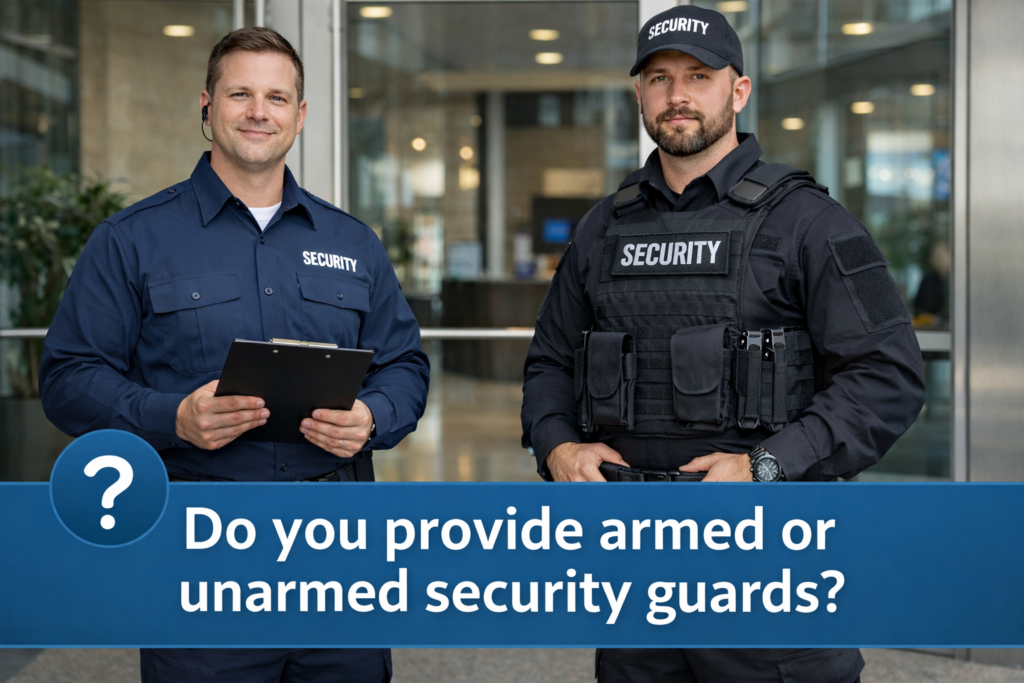
Choosing the right type of security service is essential for ensuring the safety of people, property, and assets. Many businesses and property owners ask whether armed or unarmed security guards are the better option. The correct choice depends on the level of risk, the nature of the site, and legal requirements. Armed security guards provide a higher level of protection for high-risk environments, while unarmed guards are ideal for routine surveillance, access control, and customer-facing roles. Understanding these differences allows you to make a confident, informed decision that balances security, professionalism, and cost-effectiveness Understanding Armed and Unarmed Security Guard Services Security guard services play a vital role in protecting people, property, and business assets. Depending on the level of risk and the environment, security services are generally divided into two main categories: armed and unarmed security guards. Each type serves a different purpose and is suitable for specific situations. Choosing the right option requires understanding how these services work, what risks they address, and what legal requirements apply. Many businesses today prefer to hire security guard services that are customized to their location, industry, and security challenges. A well-planned security strategy not only prevents crime but also improves safety, confidence, and daily operations. What Are Armed Security Guards? Armed security guards are licensed professionals authorized to carry firearms while on duty. Their main responsibility is to handle high-risk security situations where there is a potential threat of violence. These guards are commonly deployed in locations such as banks, government buildings, cash-handling facilities, and sites with valuable assets. Their presence alone acts as a strong deterrent to criminal activity. Armed guards are trained to assess threats quickly and respond only when legally justified. Because of the responsibilities involved, businesses that require maximum protection often book professional armed security to ensure safety in high-threat environments. Armed Vs. Unarmed Guards: Pros & ConsTo assist you in choosing between armed or unarmed security guards, below is an overview of the pros and cons of each: Armed Security Guards Unarmed Security Guards Pros – Professionally trained and licensed to carry firearms– Ideal for serious security threats and violent situations– Employed in high-risk settings that deal with high-value people, money, and expensive goods like banks and museums – They offer a more cost-effective solution for low and medium-risk businesses like parking lots, apartment complexes, and construction sites– Effective visual deterrents that can carry out other duties like regular patrols, access control, customer assistance, and threat identification Cons – Guards carrying firearms can cause discomfort to employees and customers– They are more expensive than unarmed guards but offer a greater degree of security– They are expected to use lethal force that can result in fatalities which leads to higher insurance expenses and greater liability – They only carry non-lethal weapons so they are not ideal in settings that are prone to violent crimes *They can effectively de-escalate conflicts as well as cooperate with law enforcers and emergency response providers to mitigate damages to your business Find a more detailed discussion of the pros and cons of armed security guards and unarmed security guards here. Roles and Responsibilities of Armed Security Guards The duties of armed security guards go beyond simply carrying a weapon. They monitor access points, conduct patrols, respond to emergencies, and coordinate with law enforcement when needed. Armed guards must demonstrate excellent judgment, discipline, and emotional control in all situations. They are trained to use force only as a last resort, following strict legal and ethical guidelines. Due to the sensitive nature of their role, armed guards undergo extensive background checks and continuous training to maintain professional standards. What Are Unarmed Security Guards? Unarmed security guards focus on prevention, observation, and communication rather than physical force. They do not carry firearms but rely on professional training, situational awareness, and conflict de-escalation skills. These guards are commonly found in offices, shopping centers, residential buildings, schools, and events. Their approachable presence helps maintain a safe and welcoming environment. Many businesses choose to get reliable unarmed guard services because they offer effective protection without intimidating employees, customers, or visitors. Key Functions and Benefits of Unarmed Security Guards Unarmed guards perform regular patrols, manage access control, monitor CCTV systems, and report suspicious activity. They also assist visitors, provide customer support, and handle minor incidents before they escalate. One major advantage of unarmed security is cost-effectiveness. Since they do not require firearm licensing or advanced weapons training, unarmed guards are more affordable while still delivering strong preventive security. Their presence alone significantly reduces theft, vandalism, and unauthorized access. Armed vs Unarmed Security Guards: Key Differences The main difference between armed and unarmed security guards lies in the level of force they are authorized to use. Armed guards carry firearms and are trained for high-risk situations, while unarmed guards rely on non-lethal methods and communication skills. Cost is another important factor. Armed security services are generally more expensive due to licensing, insurance, and training requirements. Risk level also plays a major role in determining which option is suitable for a specific location. Pros and Cons of Armed and Unarmed Security Guards Armed guards offer strong deterrence and immediate response capabilities in dangerous environments, but they can be costly and may make some people uncomfortable. Unarmed guards provide a calm and professional presence, ideal for customer-facing environments, but they are not suitable for locations prone to violent crime. Both types are effective when used correctly. The key is matching the level of security to the actual risk rather than assuming one option is always better. When Should You Choose Armed Security Guards? Armed security guards are best suited for high-risk locations such as financial institutions, jewelry stores, data centers, and critical infrastructure facilities. Businesses operating in areas with a history of violent crime may also benefit from armed protection. In such cases, it is essential to book professional armed security after a proper risk assessment to ensure legal compliance and operational effectiveness. When Are Unarmed Security Guards the Best Option? Unarmed guards are ideal for
How to Choose a Security Company in Melbourne | 2026 Guide

How to Choose a Security Company in Melbourne | 2026 Guide Connecting with Right security partner in Victoria is hard without knowing the criteria of choosing Security Company. It will lead to gaps in protection and stress. Therefore always choose the professional security company near you that keeps your people, property, and assets safe with highly trained security guards. As a leading Security company in Melbourne, in this guide we help you make an informed choice with clear steps and smart checks. We ensure that, after reading this guide, you will be crystal clear about selecting the right security company. Why Choosing the Right Security Guard Company Matters There are many reasons to choose a company that provides professionally trained security guards. In a city like Melbourne, Victoria, where crime rates can be a concern, reliable security is essential. Whether you’re running a business, managing an event, protecting a construction site, or operating a hotel, hiring professional security staff is crucial to safeguarding your assets. A quality security team: Securityguardservices.com.au has delivered trained, licensed guards in Melbourne for over 16 years, tailoring solutions for homes, businesses, events, and more. 1. Check Licensing, Compliance, and Insurance Before you engage any company, make sure it meets Victoria’s legal requirements. Ask the provider to show: We employ fully licensed and professionally trained security guards who meet Victorian compliance standards. 2. Review Experience and Track Record A security company with real experience handles risks better. Look for: 3. Evaluate Services and Specialization Your security requirements depend on your site and situation. Choose a company with services that match your exact security needs. For example: Explore our full range of professional options here: Our Services. 4. Ask About Guard Training and Conduct Standards Guard quality makes a huge difference in service reliability. Check: We select trained and certified security staff who can handle situations confidently and professionally. 5. Request Clear Pricing and Quotes Get written quotes from multiple companies. Your comparison should include: 6. Check Flexibility and Response Times Good security companies adapt to your schedule and needs. Ask: Rapid response and flexible scheduling help maintain safety even when plans change. 7. Understand What Others Say Read client reviews and ask for references. Reputable companies are proud to share feedback and success stories. Security Guard Services shows a strong record and consistently positive reviews from clients across different sectors. 8. Avoid These Common Selection Mistakes Don’t fall for low prices alone. Very cheap services might cut corners or provide inexperienced guards. Also avoid companies that: Final Checklist Before You Decide Use this quick checklist before hiring: If all boxes check out, you can proceed with confidence. Connect with Trusted Security Providers If you need reliable security in Melbourne, consider us because we offer a full suite of solutions that suit your safety needs. When you work with us, you get licensed guards, fast response times, transparent pricing, and ongoing support from experienced security consultants. We focus on prevention, visibility, and rapid action to keep your site secure at all times. Get a custom security quote or speak with one of our consultants to discuss the best security plan for your property or event in Melbourne. Related Posts Why Are Security Uniforms Essential? Security Guard vs. Watchman What’s the Real Difference? How to File a Complaint Against a Security Guard in Australia Understanding the Levels of Security Guards in Australia Protective Security Officers in Melbourne: Roles, Benefits & When You Need One How to Integrate CCTV and Security Guards for Better Property Protection Understanding the Importance of Crowd Management at Events The Role of Security Guards in Managing Workplace Conflicts Effective Self-Defense Tactics and Techniques for Security Guards The Role of Guards in Educational Institutions How Security Guards Support VIP and Executive Protection Top Benefits of Having Security Guards in High-Risk Areas Emergency Response Protocols Every Security Guard Should Know Evolution of Security Guard Training & Certification in Australia Top Security Threats in Australian Retail and How Guards Mitigate Them How to Establish a Security Guard Business in Australia The Role of K-9 Units in Security Guard Services How Security Guards Handle Suspicious Packages: A Comprehensive Guide The Importance of Body Cameras for Security Guards The Role of Security Guards in Airport Security
Why Are Security Uniforms Essential?
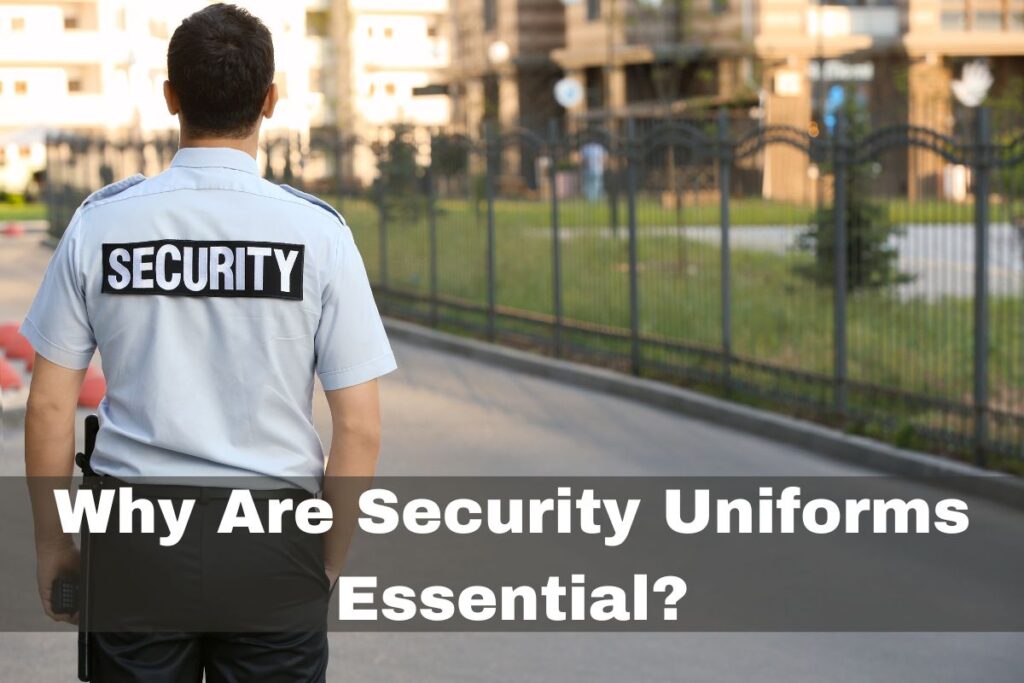
January 1, 2026 Why Are Security Uniforms Essential? [featured_image] Security uniforms are far more than simple work attire; they play a vital role in strengthening both the professionalism of security personnels and the safety of a facility. To highlight the true importance of security uniforms, it’s essential to explore the key functions they serve and the value they bring to effective security operations. Why Should Security Guards Wear Uniforms 1. Professional Identification and Authority Security uniforms are essential for professional identification, clearly distinguishing security personnel from the general public. This instant recognition is vital in both routine situations and emergency scenarios. A well-designed uniform conveys authority and reliability, enabling security staff to respond quickly and take control when needed. In busy settings like airports, shopping malls, and public events, the ability to identify security officers at a glance reduces confusion and ensures timely action. Beyond functionality, uniforms also project a professional image, reinforcing the credibility and seriousness of security operations. 2. Psychological Deterrent The presence of uniformed security guards serves as a significant psychological deterrent to potential wrongdoers. The sight of a uniform can discourage criminal activities by signaling that the area is actively monitored and protected. This deterrent effect is amplified in places like retail stores, where shoplifting can be a persistent issue. A visible security presence reduces the likelihood of theft and vandalism, fostering a safer environment. The psychological impact extends to employees and visitors as well, enhancing their sense of safety and encouraging them to adhere to rules and regulations. 3. Enhanced Professionalism and Confidence Uniforms play a vital role in enhancing the professionalism of security personnel. Wearing a uniform instills a sense of duty and pride, encouraging guards to remain more diligent and attentive in their roles. A professional appearance also reassures clients and the public that security is being managed with seriousness and reliability. Furthermore, uniforms strengthen the confidence of security guards by reinforcing their authority and responsibilities. This boost in morale often translates into improved performance, enabling guards to respond more decisively and responsibly in critical situations. 4. Safety and Functionality Security uniforms are designed with practicality and safety in mind. They often feature high-visibility elements, durable materials, and functional designs tailored to the demands of security work. High-visibility vests, reflective strips, and bright colors ensure that security personnel are easily seen, even in low-light conditions. This visibility is crucial for directing traffic, patrolling, and responding to incidents. Functional aspects, such as multiple pockets and loops, allow guards to carry essential tools like radios, flashlights, and first aid kits, ensuring they are prepared for any situation. The durability of the uniforms also means they can withstand the physical demands of the job, providing long-lasting protection and comfort. 5. Brand Image and Consistency For businesses and organizations, security uniforms are a key component of brand image and consistency. Customizing uniforms with company logos and colors helps to create a unified and professional appearance. This branding not only reinforces the company’s identity but also instills a sense of pride and belonging among the security team. Consistent uniforms contribute to a cohesive look, making security personnel easily recognizable as part of the organization. This visual consistency can enhance the overall customer experience, as visitors feel reassured by the visible presence of a coordinated and professional security team. 6. Regulatory Compliance In many areas, security uniforms are legally mandated, making compliance with these regulations crucial. Proper uniforms ensure that security staff are easily distinguishable from civilians while helping organizations avoid legal complications. Regulatory standards often outline specific requirements—such as identification badges, approved color schemes, and official insignia—to create a consistent and professional appearance. By following these guidelines, security teams not only meet legal obligations but also strengthen their credibility and professionalism, offering clients and the public greater confidence in their services. 7. Public Reassurance The visible presence of uniformed security personnel provides significant reassurance to the public. Knowing that trained professionals are on hand can alleviate concerns and enhance the overall experience for visitors, employees, and customers. In settings such as shopping centers, hotels, and public events, the presence of uniformed guards can create a welcoming and secure atmosphere. This reassurance is particularly important in high-risk areas or during times of heightened security, where the visibility of a dedicated security team can help to calm fears and ensure that everyone feels safe and protected. Factors to Consider When Designing Security Uniforms When we design our security company uniforms – Securityguardservices.com.au, we particularly consider these below factors for the perfect fit and brand identification. 1. Comfort and Fit Comfort is crucial for security personnel who often endure long shifts. Uniforms should provide ease of movement and be made from breathable materials to maintain comfort throughout the day. Proper sizing is essential, and adjustable features can accommodate different body types. This ensures that security personnel can perform their duties without discomfort or restriction. 2. Durability Security uniforms must withstand rigorous daily use. High-quality fabrics that are resistant to wear and tear, combined with reinforced stitching in high-stress areas, ensure longevity. Durable uniforms reduce the frequency of replacements, saving costs over time and maintaining a professional appearance. 3. Weather Appropriateness The climate where security personnel operate significantly influences uniform choice. For hot climates, lightweight, moisture-wicking fabrics help keep personnel cool and dry. In colder regions, uniforms should include insulated options and layers to maintain warmth. Ensuring weather-appropriate uniforms enhances comfort and effectiveness in various conditions. 4. Functionality Uniforms should be designed with practical features that support the job’s demands. This includes ample pockets for carrying essential tools, loops or clips for radios and other equipment, and easy access to items without compromising security. Functional uniforms enhance efficiency and readiness, allowing personnel to perform their tasks more effectively. 5. Visibility High-visibility uniforms or those with reflective elements are crucial for safety, especially in low-light conditions. Bright colors and reflective strips enhance visibility, reducing the risk of accidents. Visibility is essential for ensuring the safety of security personnel and those they protect.
Security Guard vs. Watchman What’s the Real Difference?

Security Guard vs. Watchman What’s the Real Difference? Have you ever wondered what really separates a security guard from a watchman? At first glance, both seem to serve the same purpose keeping people and property safe. But if you dig a little deeper, you’ll see there’s more to it than that. Their roles, training, and responsibilities are quite distinct, and understanding these differences can help you choose the right type of security services for your business or home. To ensure top-tier protection, explore our professional security guard services designed to keep your premises secure and your peace of mind intact. The Real Role of a Watchman: More Than Just a Night Shift A watchman is often the silent protector of buildings, construction sites, and residential properties during off-hours. Their job revolves around being observant and proactive as walking the premises checking locks ensuring lights and alarms are functioning, and reporting any suspicious activity. They might not have the latest gadgets or training certifications, but their reliability and attentiveness make them indispensable. In many neighborhoods, a familiar watchman offers a reassuring sense of safety that technology alone can’t replace. Watchman vs. Security Guard: The Practical Day-to-Day Differences The day-to-day difference between these two roles lies in their scope of duty and training level. A watchman’s work is routine and observational often focused on a single property. In contrast a security guard is responsibilities are broader combining technology use report writing and sometimes even emergency first aid. While a watchman is primarily a physical presence a security guard blends physical vigilance with professional systems management. This distinction becomes crucial when deciding who fits your specific safety needs. Training and Licensing: Understanding Who Needs What One of the biggest contrasts between a watchman and a security guard lies in training and licensing. Most countries require guards to complete accredited courses covering surveillance emergency response legal procedures, and communication. They also need to obtain a valid license before being deployed. Watchmen usually do not go through such formal training programs; their learning comes from experience and familiarity with the premises. This makes guards more suitable for high-risk or public-facing roles, while watchmen fit best in low-risk stable environments. Tools of the Trade: The Gear and Tech Behind the Uniform The equipment each role uses also highlights their difference. Security guards often handle surveillance systems radios body cameras and alarm control panels. They might even use digital reporting software to log incidents in real-time. Watchmen on the other hand depend more on simple tools is flashlights whistles logbooks and sometimes basic communication devices. It is a matter of scale guards operate within a system while watchmen rely on personal vigilance. Comparing Costs: Which Option Fits Your Budget Better? When deciding between a guard and a watchman, cost naturally comes into play. Hiring a licensed guard from a professional agency generally costs more due to their training insurance and certifications. Watchmen, being less formal in their structure are more budget-friendly for smaller properties. However, choosing purely based on price can be risky. High-risk locations large crowds or valuable assets justify the added expense of trained guards. Think of it as an investment in long term security rather than a short-term saving. Comparison Table: Security Guard vs Watchman Feature / Aspect Security Guard Watchman Primary Role Actively protects people and property by monitoring, patrolling, and responding to threats. Primarily keeps watch over property during specific hours, often at night. Training Level Requires formal training, licenses, and sometimes certifications. Minimal or no formal training; relies on experience. Duties Includes surveillance, access control, emergency response, and reporting. Focuses on observation, reporting suspicious activity, and routine checks. Technology Use Often uses CCTV, radios, and security systems for monitoring. Usually depends on manual observation and patrolling. Work Environment Found in offices, malls, events, and high-security areas. Common in residential areas, warehouses, or smaller businesses. When Hiring a Watchman Is the Smarter Choice For small businesses, residential complexes, or warehouses, a watchman can be an excellent choice. Their constant presence discourages intruders, and their familiarity with the area allows them to notice unusual activity instantly. They’re dependable, cost-effective, and can handle routine security checks without complex supervision. In quiet neighborhoods or low-crime zones, having a trustworthy watchman often provides sufficient safety and peace of mind When You Really Need a Professionally Trained Security Guard There are scenarios where only a trained security guards can do the job effectively. High-traffic commercial buildings events construction sites and public institutions require individuals with emergency management skills and crowd-control training. Security guards can also enforce access control, manage CCTV systems and de-escalate conflicts. Their professional training makes them essential for properties where a reactive approach and coordination with authorities are necessary. Professionalism and Communication: Why They Matter More Than You Think Professionalism is one of the biggest differences between a guard and a watchman. Guards undergo behavioral and communication training to ensure they can interact calmly and confidently in stressful situations. Whether it’s dealing with a visitor reporting an incident, or assisting staff they act as representatives of the business. A well-mannered guard not only protects your property but also enhances your brand is credibility and customer experience as something that cannot be measured by a paycheck alone. Legal Powers and Duties: What Every Property Owner Should Know Security guards often operate under a set of legal rights and responsibilities that grant them certain authority as like detaining trespassers or managing crowd access until police arrive. Watchmen however have limited legal powers. They can report incidents but cannot intervene beyond basic safety measures. Understanding this boundary helps property owners assign appropriate duties and avoid potential legal issues in case of an incident. How Security Staff Influence Your Business Image and Reputation Believe it or not, the way your security team behaves can directly impact how customers perceive your business. A polite alert and professional guard adds value to your reputation. On the other hand, an inattentive or untrained staff member can create negative impressions. Businesses